Earendil-1

Earendil is a flat mirror in orbit. It redirects sunlight to a site on the ground while that site is in darkness.

Approach

Earendil is a flat mirror in orbit. It redirects sunlight to a site on the ground while that site is in darkness, delivering a ~5 km spot at 0.1 lux for a few minutes per pass. More satellites overhead means more light; the constellation is the dimmer.

When a disaster takes down the grid, an alternative light source is the path to safety and a beacon for rescuers. Light is the promise that we can help our community in need and do our duty.

Sheriff Stephanie J. Rennie
Search and Rescue, Lone Pine County

Artificial light relies on electricity, fuel, and physical infrastructure like poles and wires. Reflected sunlight requires none of this. It extends access to sunlight in precise areas for finite periods of time without adding new ground infrastructure.

About 5 km across. The spot is the image of the sun cast by a flat mirror, so its size follows from the sun’s angular width and the distance to the satellite.

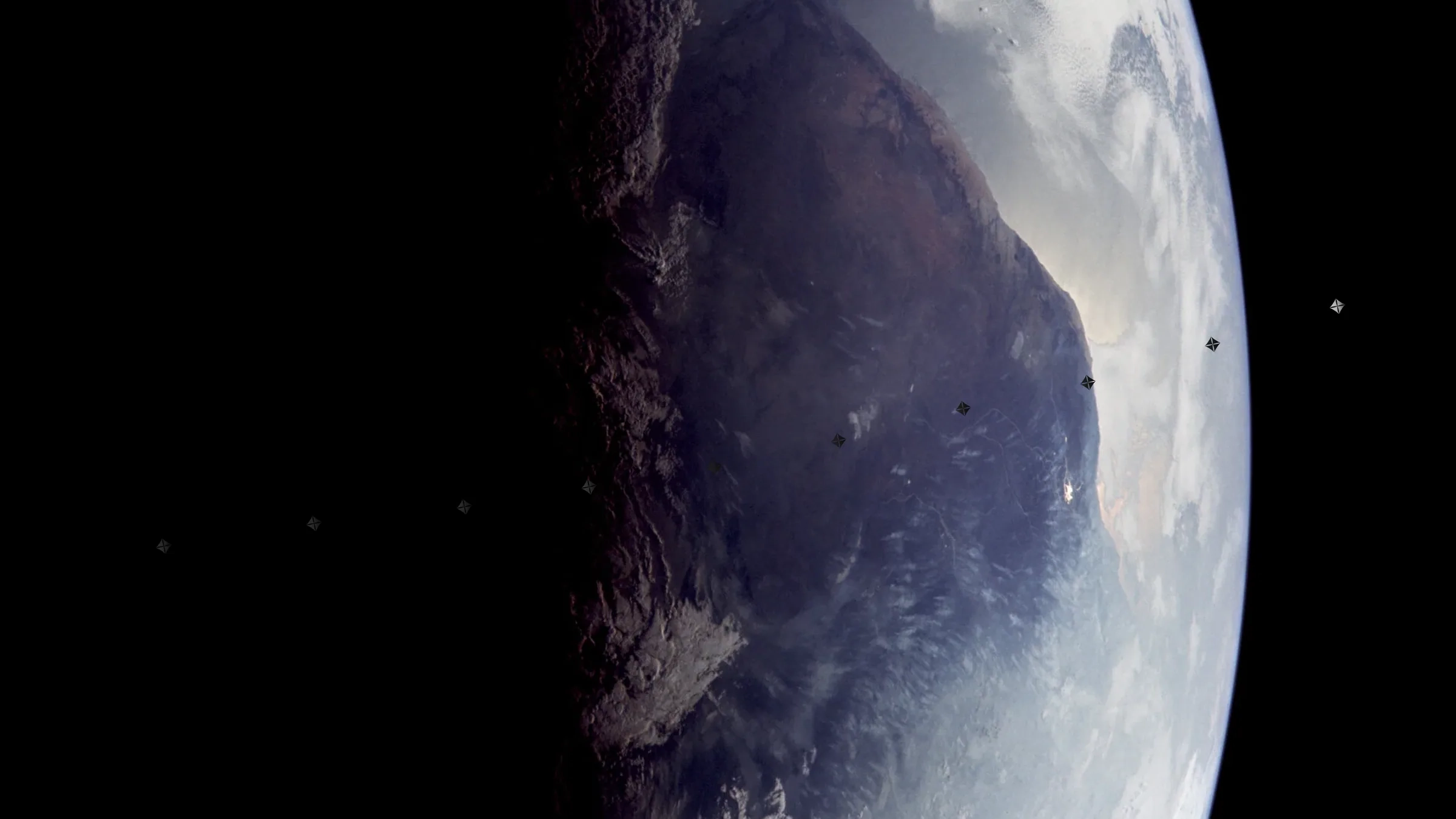
One satellite gives about the brightness of a full moon. More satellites overhead add their light to the same spot.

About four minutes per pass, while the satellite is in view of the site.

Yes, the light is adjustable. It can effectively be “turned on and off” by rotating the satellite and the timing can be scheduled so that it operates only during requested hours. In addition, the brightness is adjustable (from full moon to full noon) when multiple satellites are in orbit.

From the Sky

Ground spot of reflected sunlight across a solar field at night

From the Ground

Satellites: Illuminance: Sunlight:
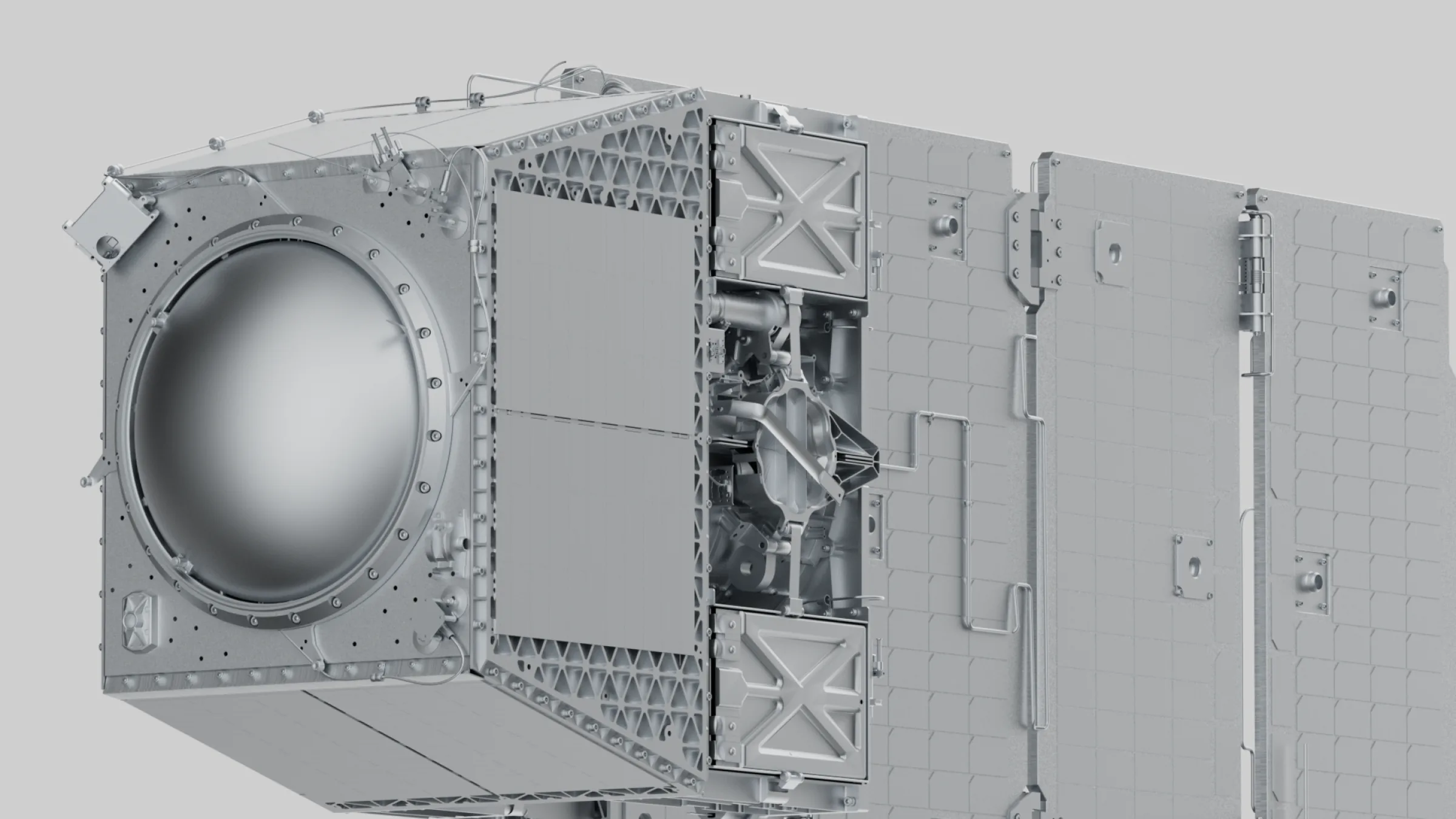
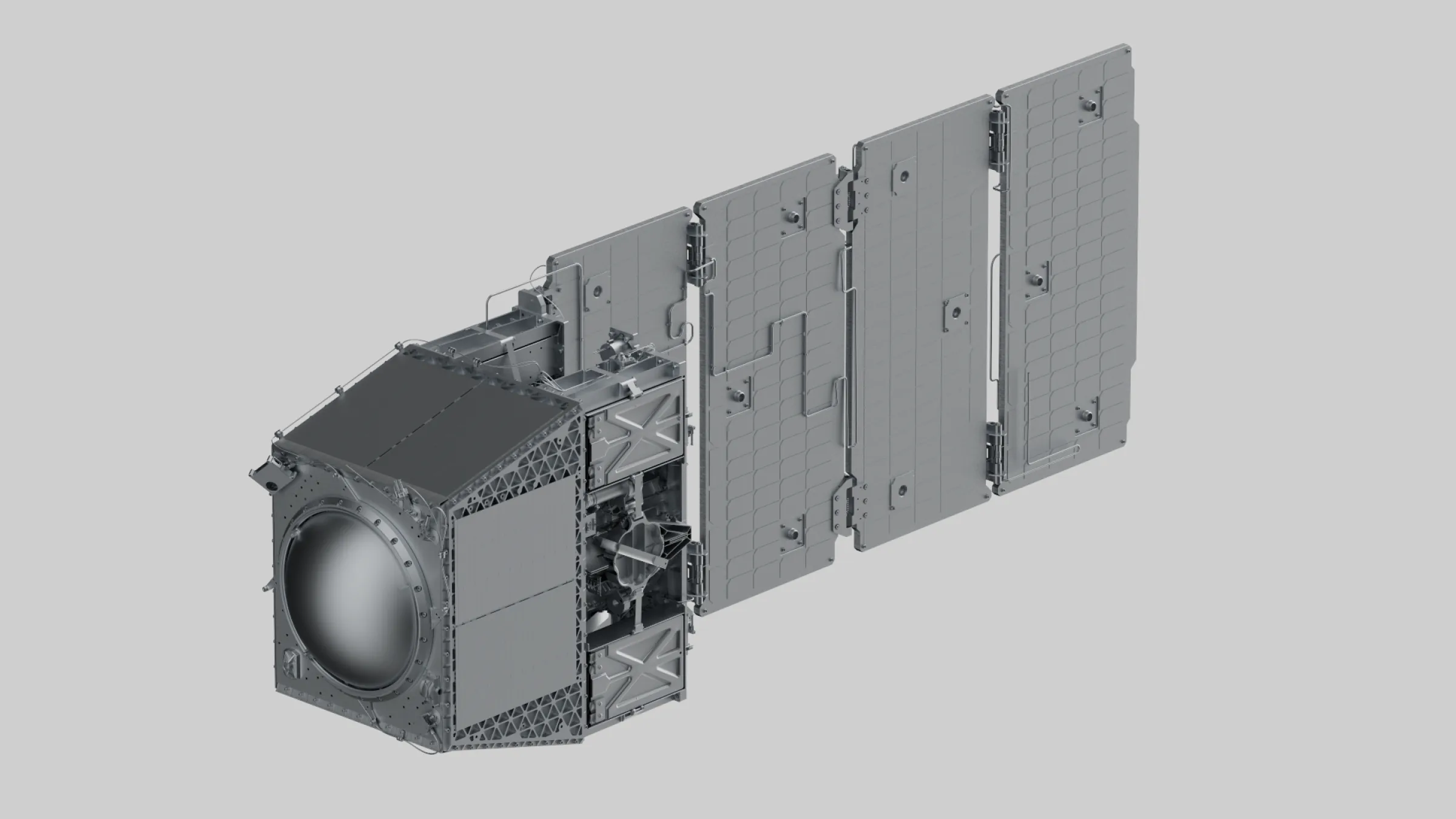
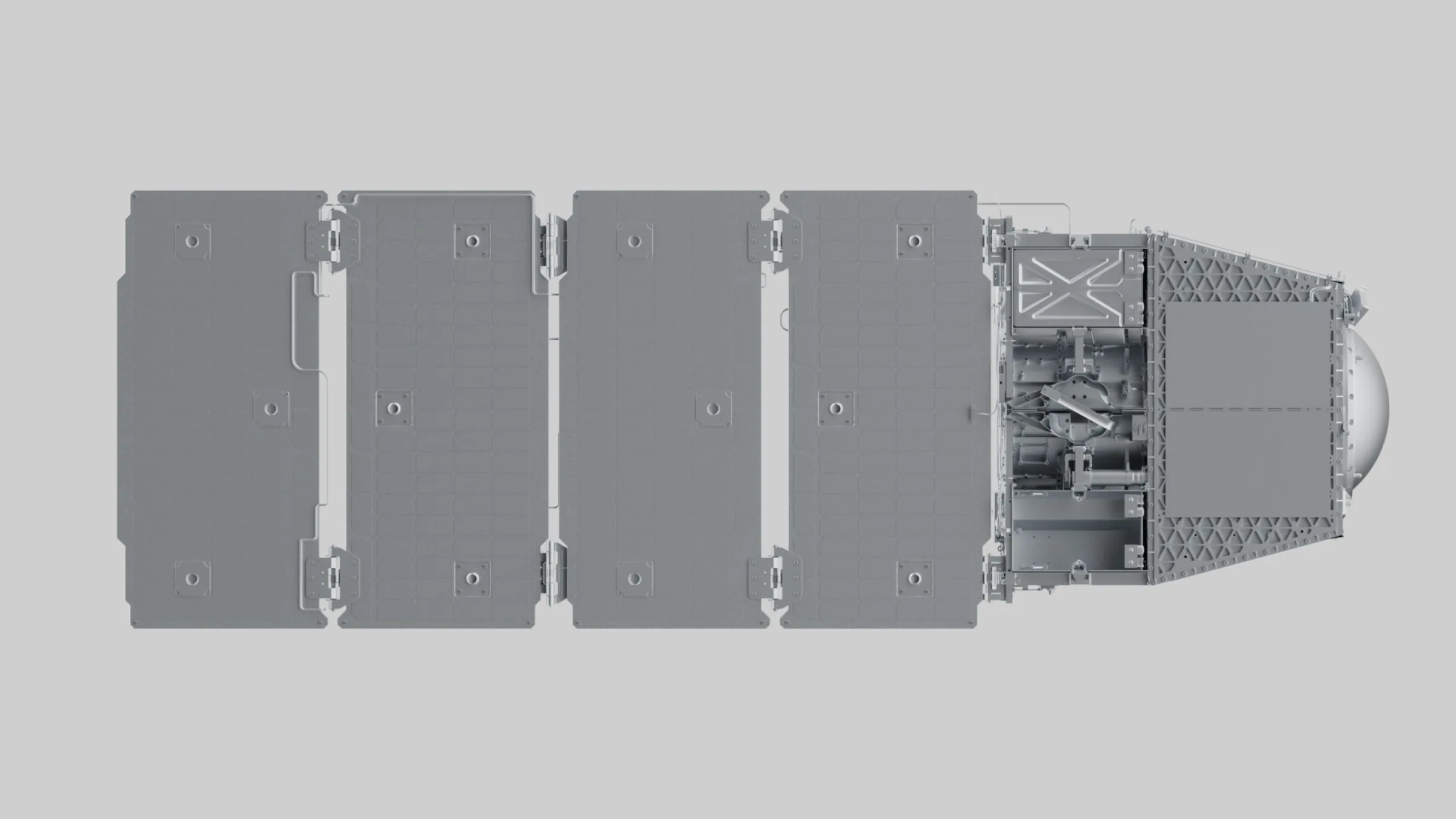
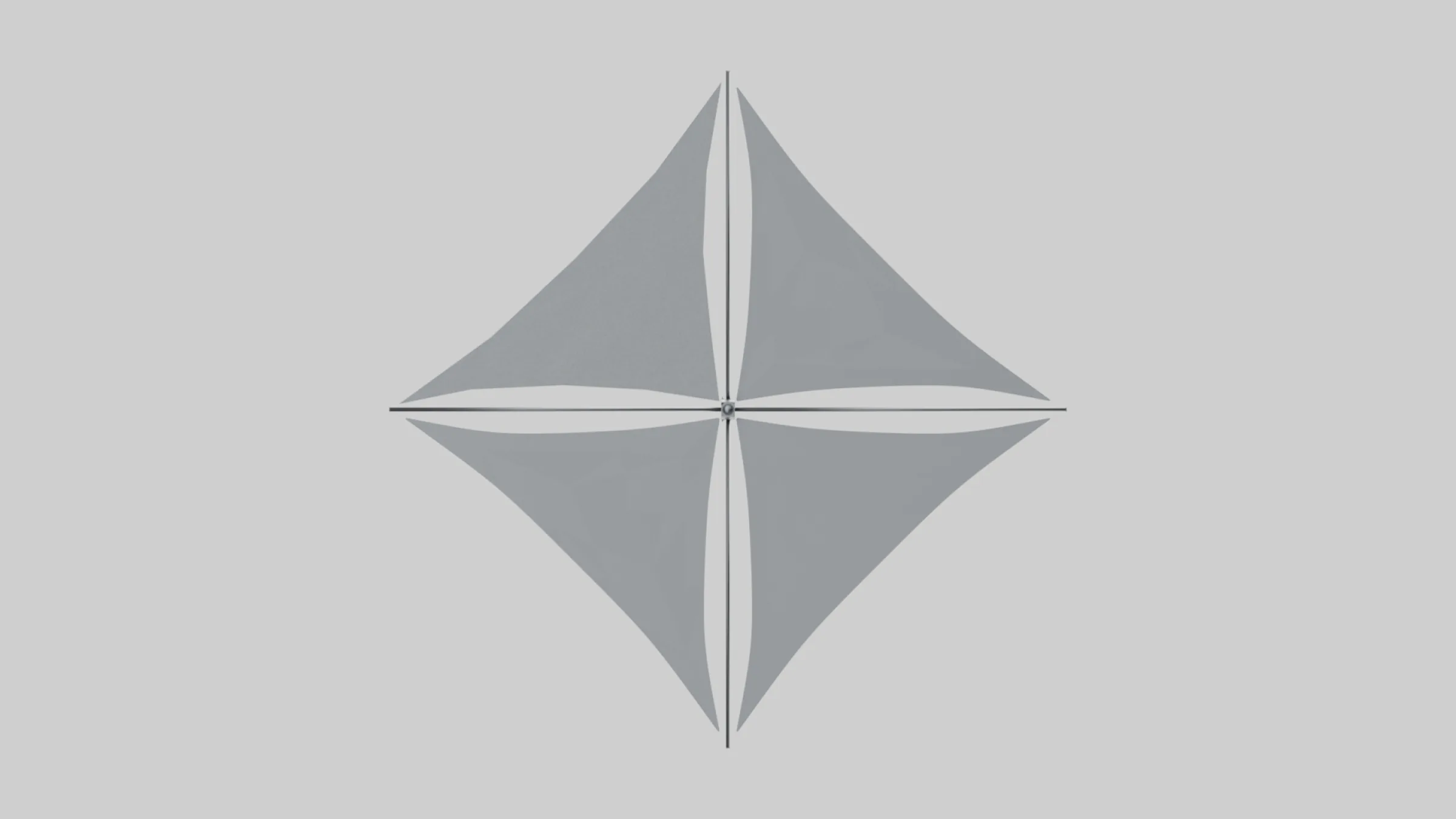
Eärendil-1 render: panels out
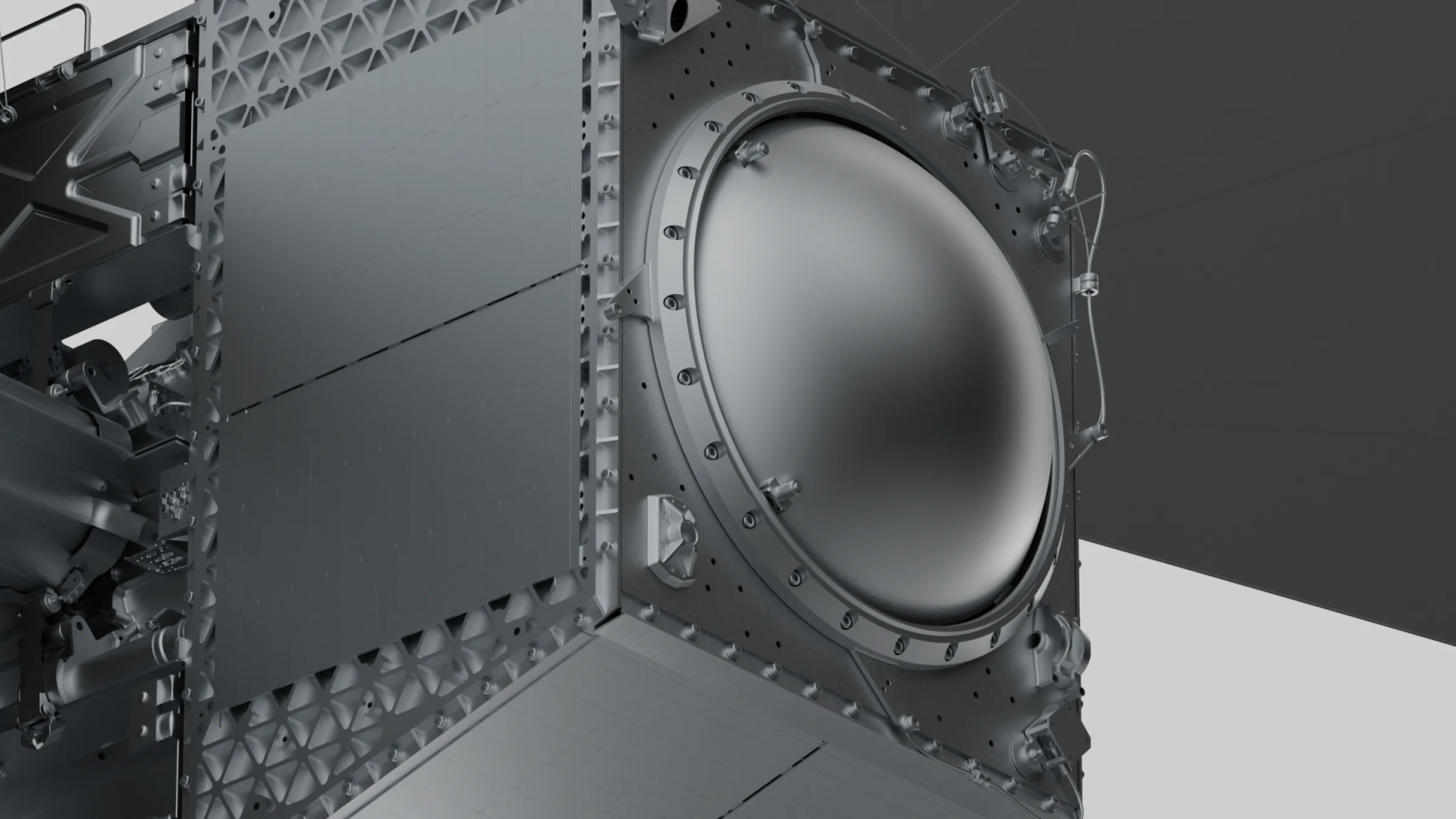
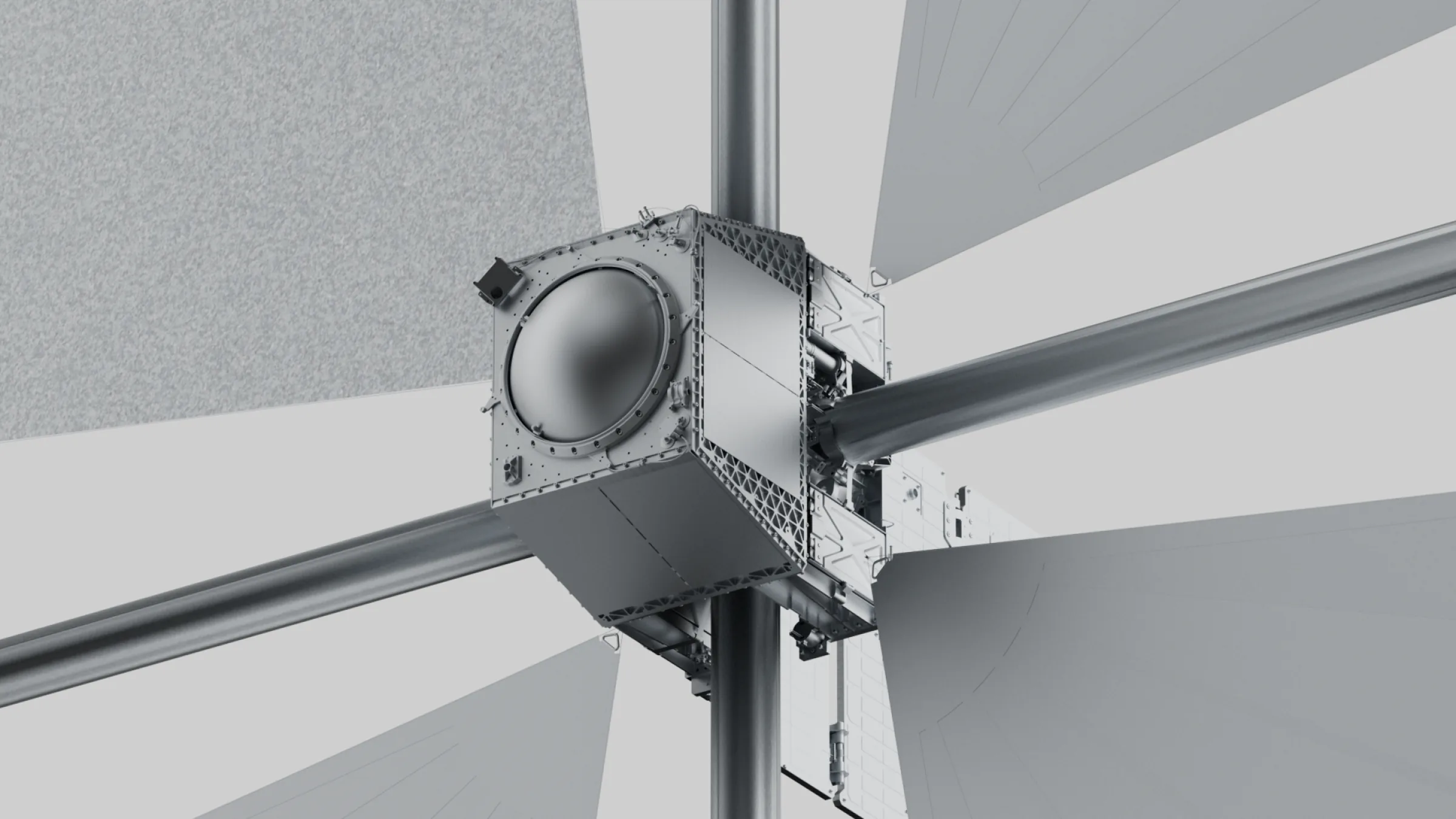
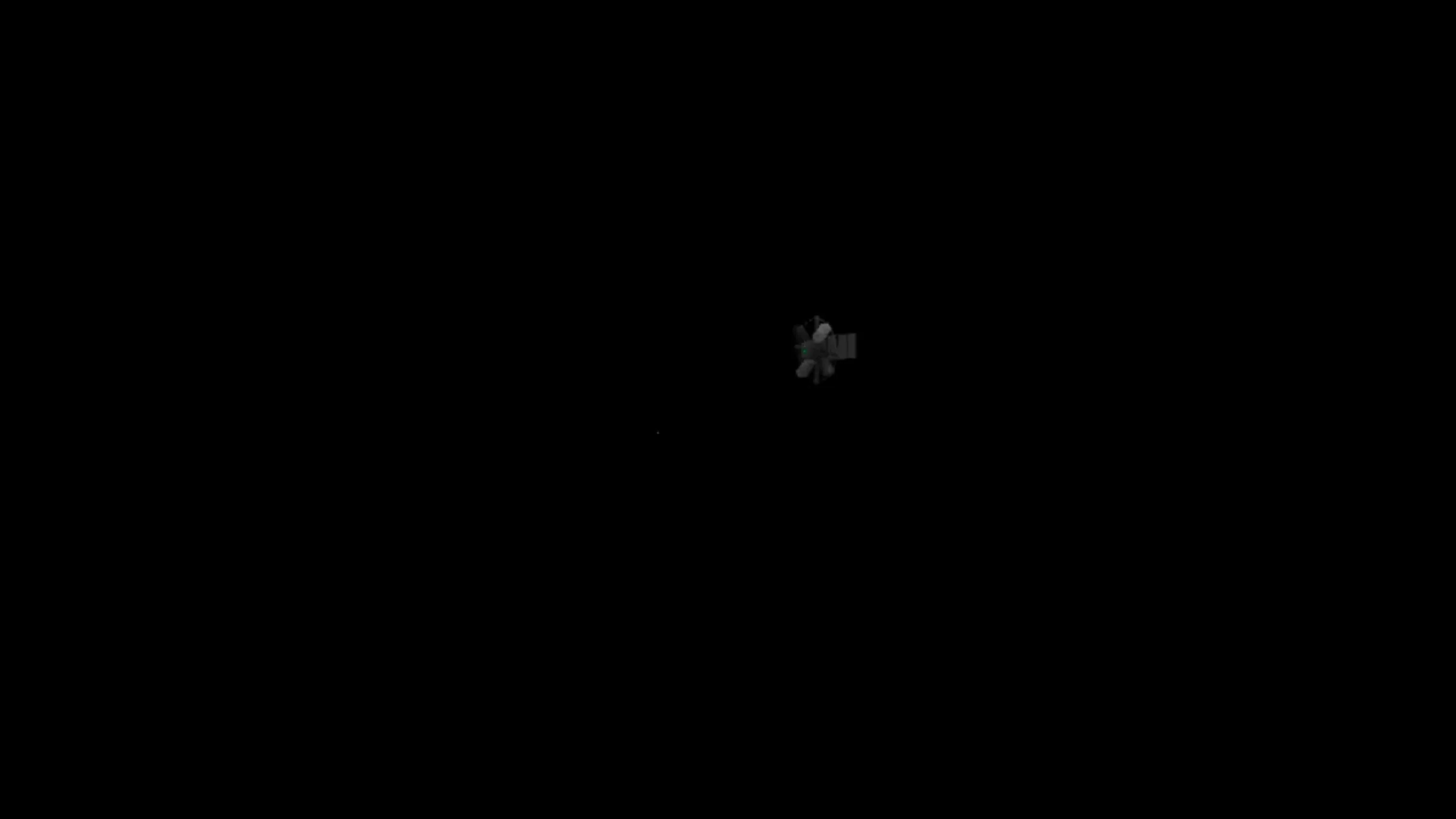
Eärendil-1 render: stowed, three-quarter
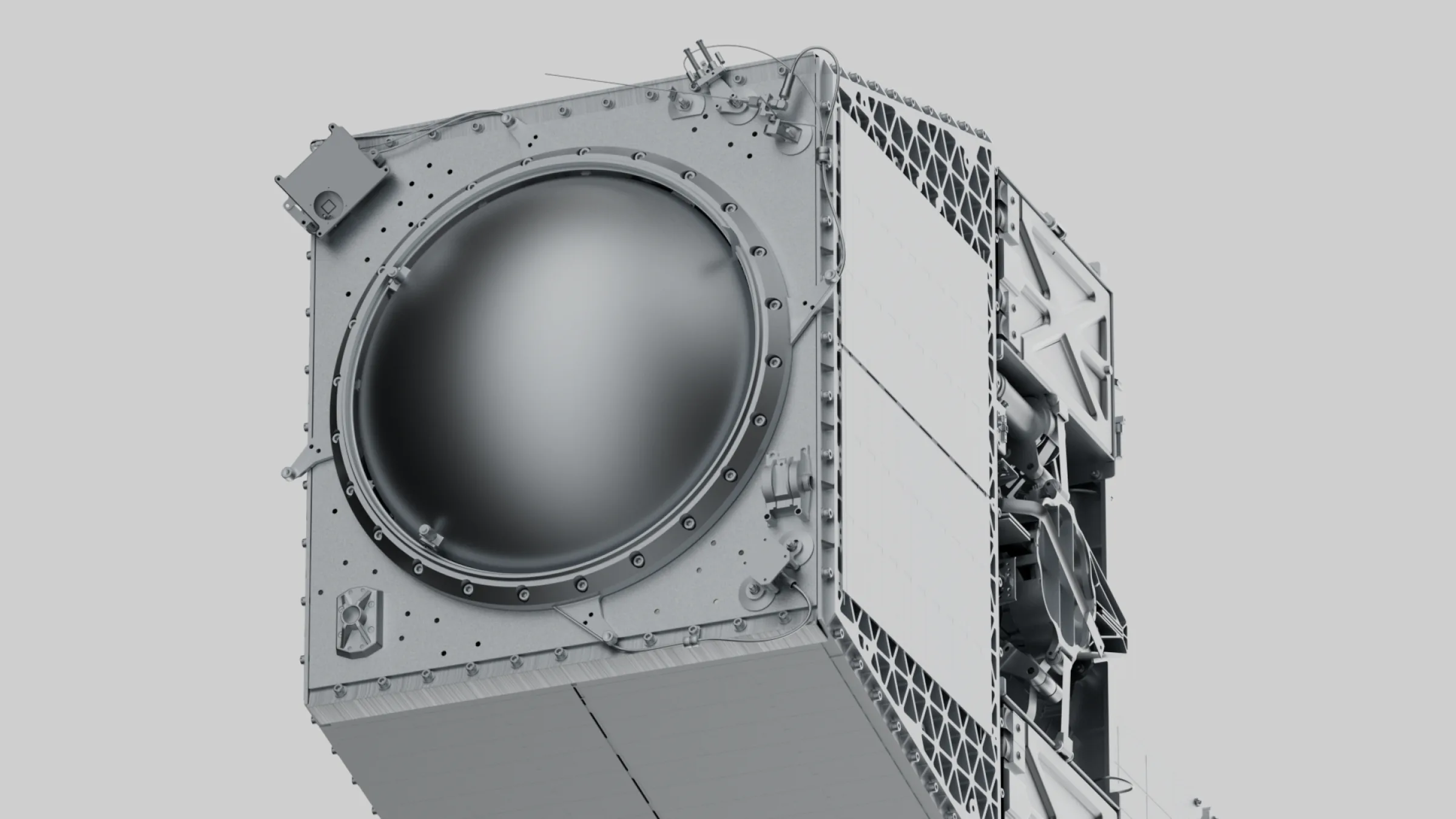
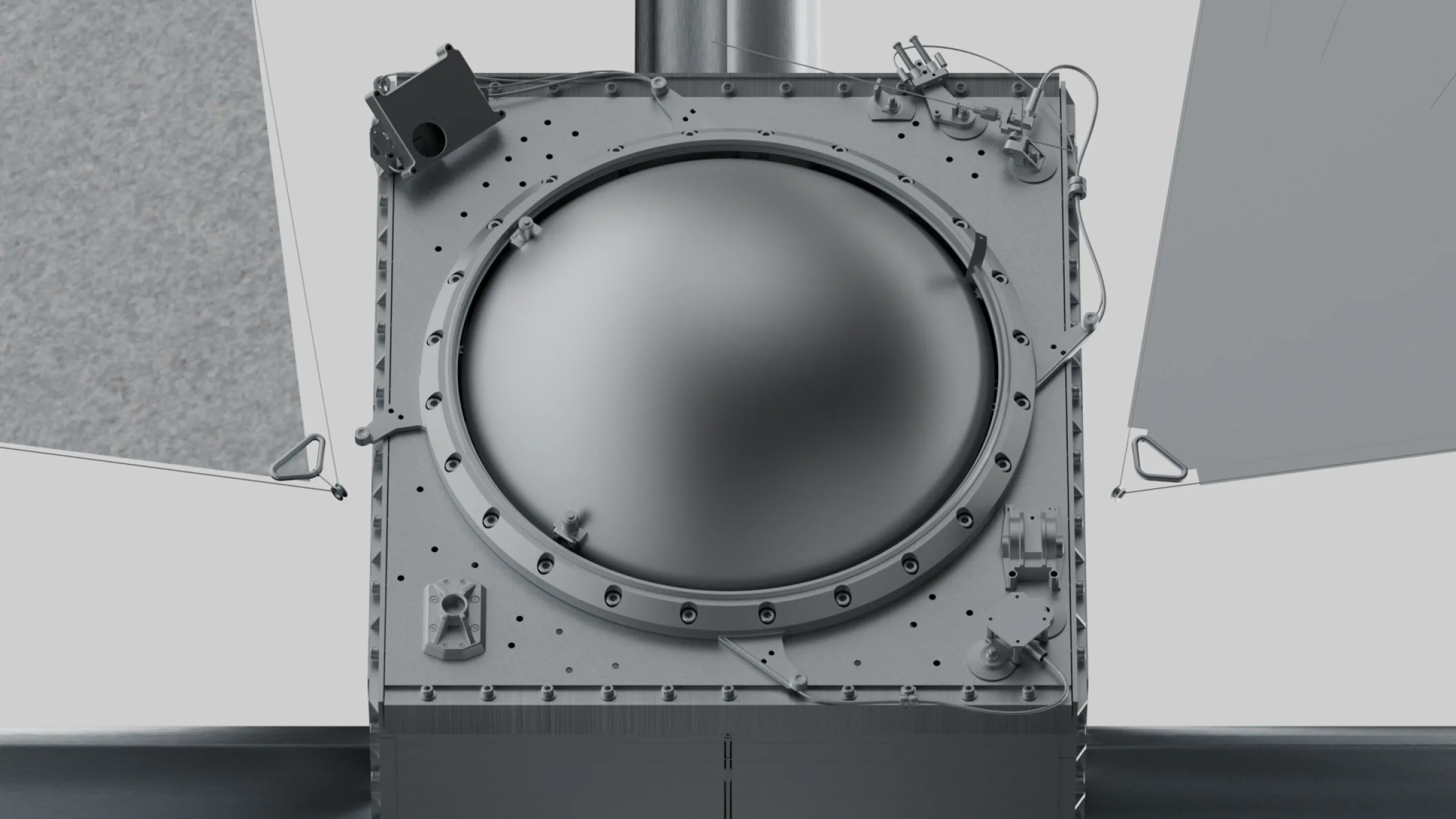
Eärendil-1 render: stowed, close
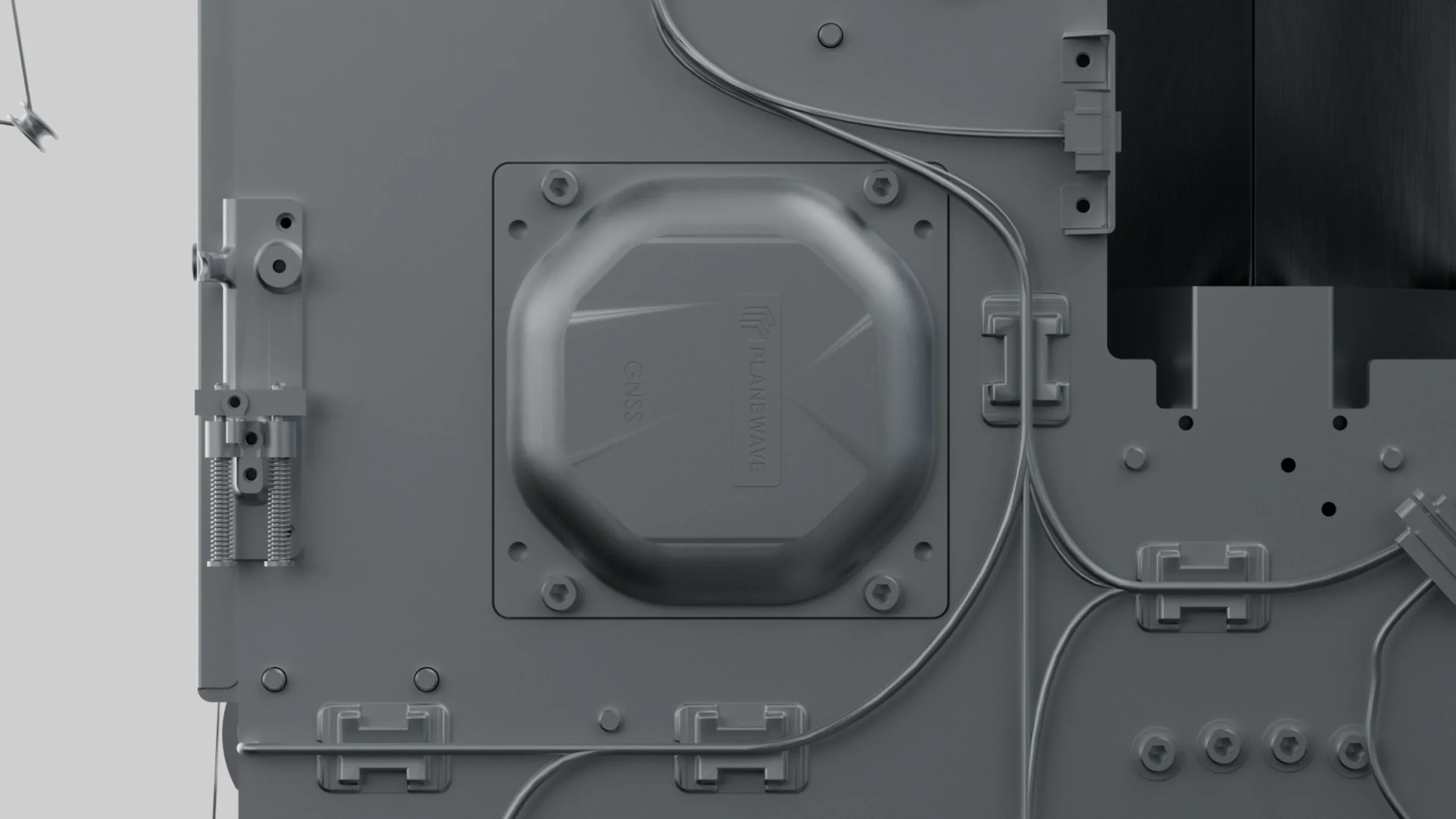
Eärendil-1 render: panel detail
Eärendil-1 render: panels unfolding
Eärendil-1 render: panels fully out, side on
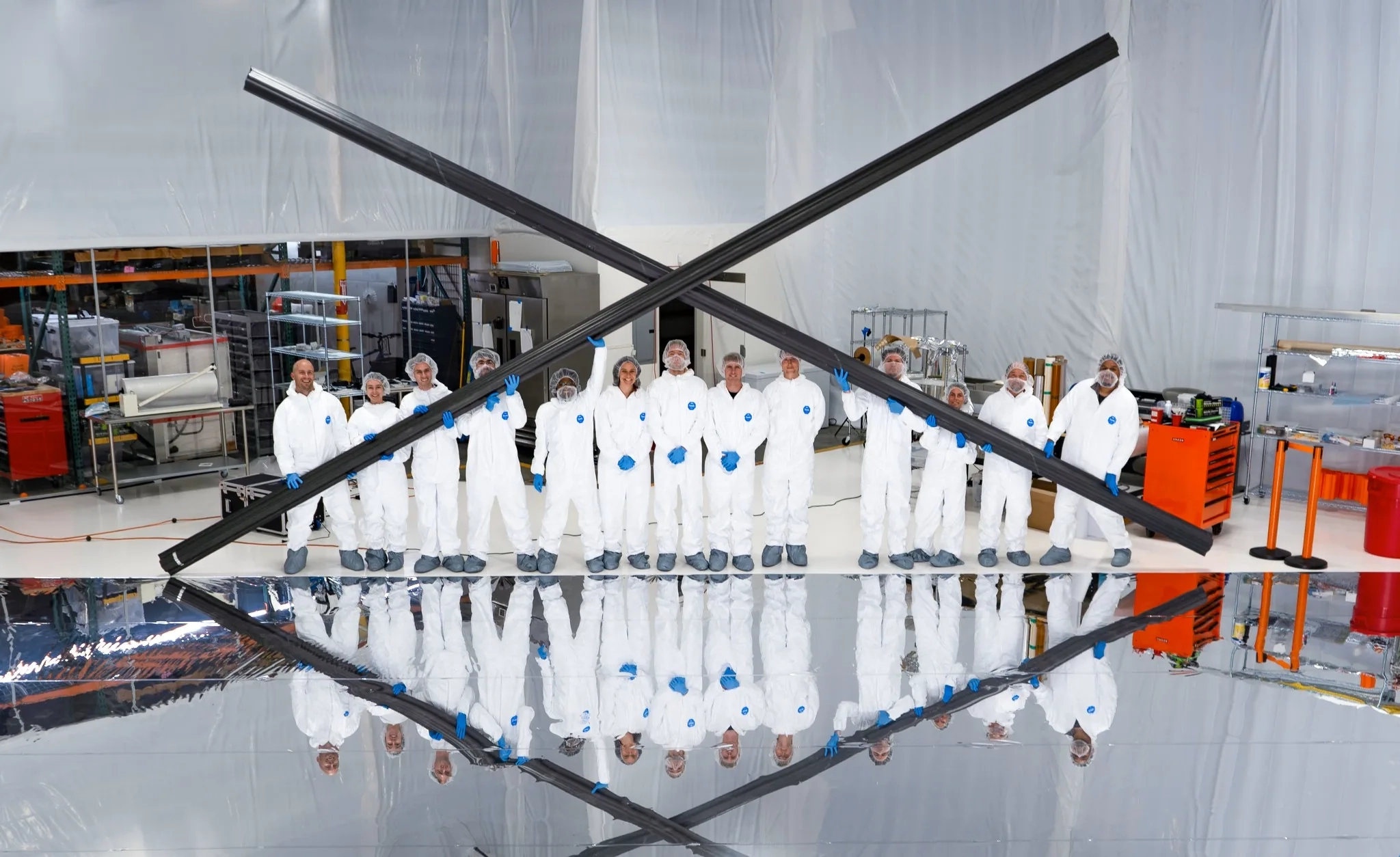
Eärendil-1 render: booms out, sail unfurling
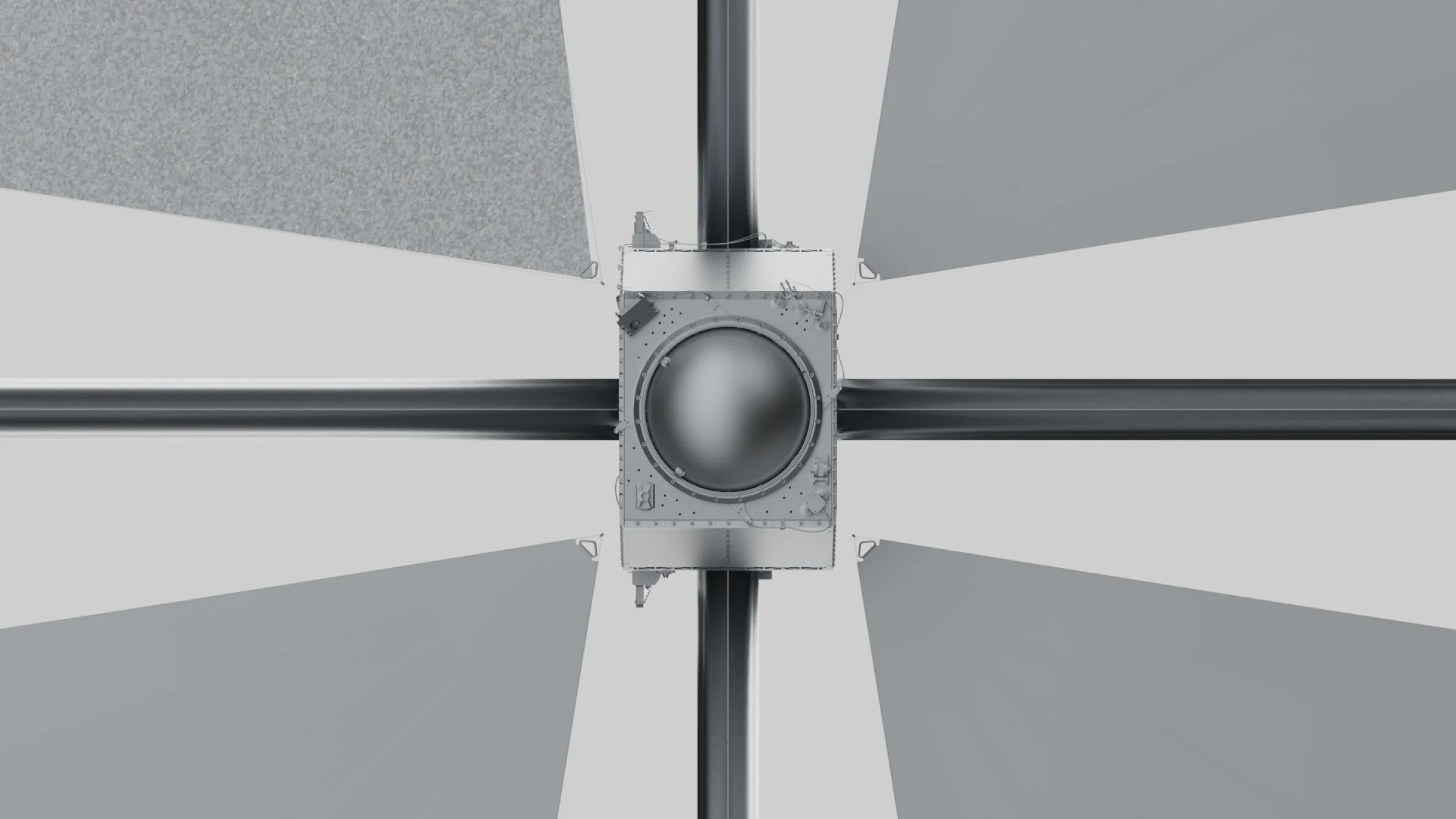
Eärendil-1 render: bus between the sail panels
Eärendil-1 render: sail deployed, face on
Eärendil-1 render: sail fully deployed
Eärendil-1 render: in orbit, far off
Eärendil-1 render: in orbit, sail deployed

Technical Specifications

Liftoff mass
About 142 kg (313 lb)
Reflector
18 × 18 m thin film
Reflective area
About 324 m² (3,500 sq ft)
Membrane
Aluminium face, space-grade plastic backing
Panels
Four triangular panels on carbon-fibre booms
Panel mass
About 500 g each
Stowed
Folds into a box about the size of a microwave
Attitude control
Three reaction wheels
Operating altitude
625 km, ±25 km
Inclination
88°, ±2°
Deployment orbit
510 km, ±20 km, 11:00 MLTAN
Ground spot
About 5 km across
Illumination
About the brightness of a full moon
Time on target
About four minutes per pass
Payload downlink
X-band, 8450–8500 MHz
TT&C
S-band, 2025–2110 MHz up / 2200–2290 MHz down