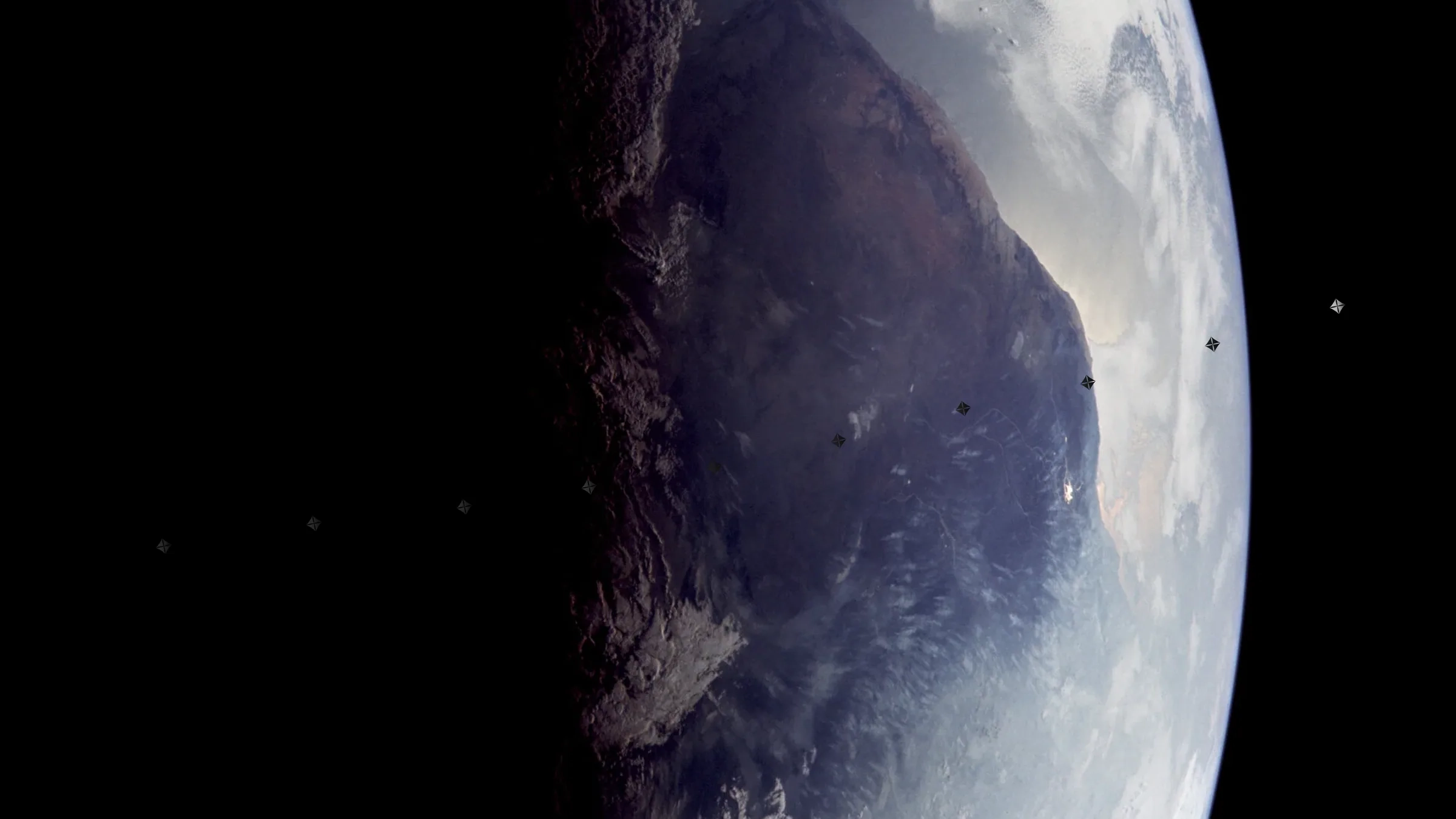
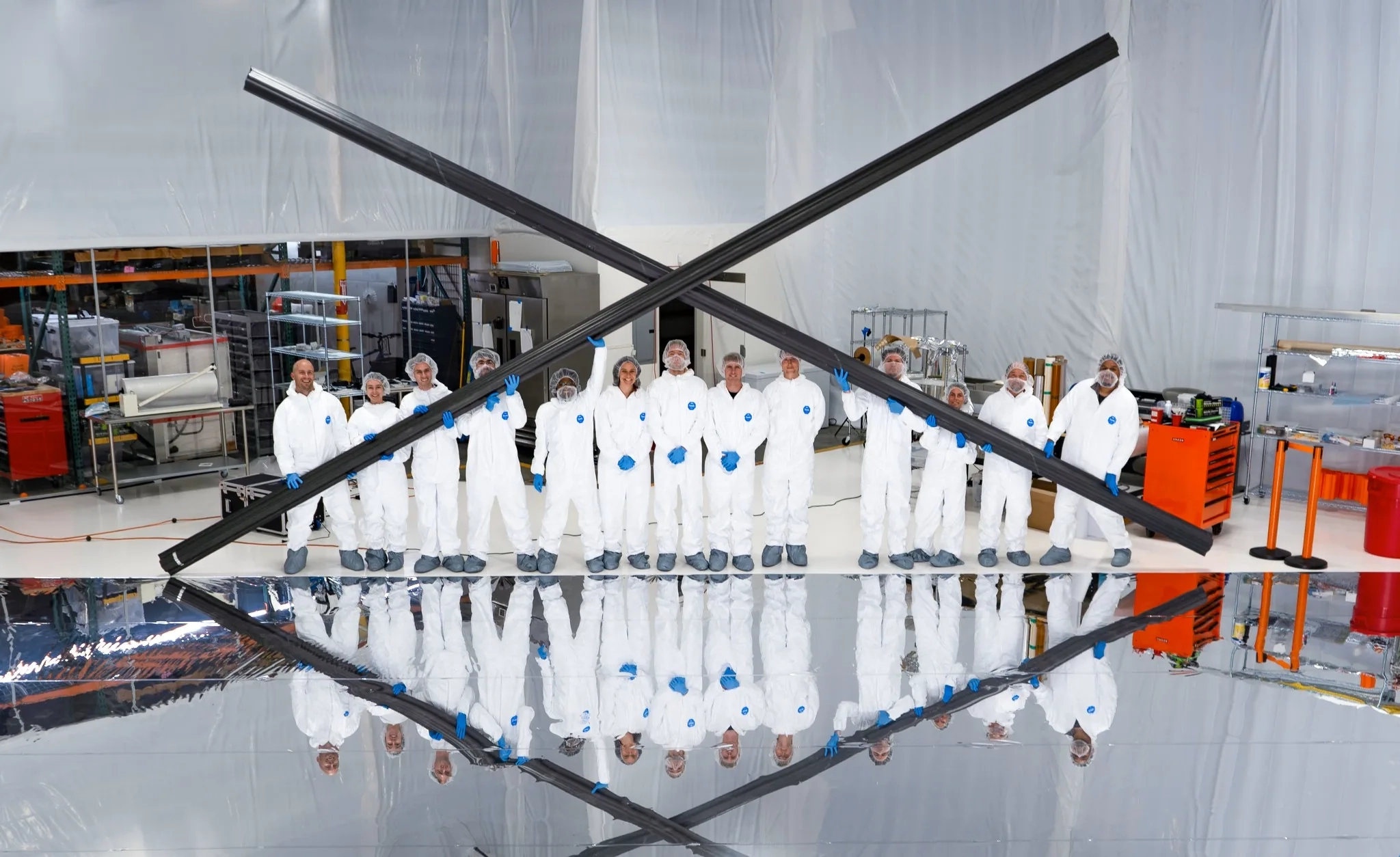
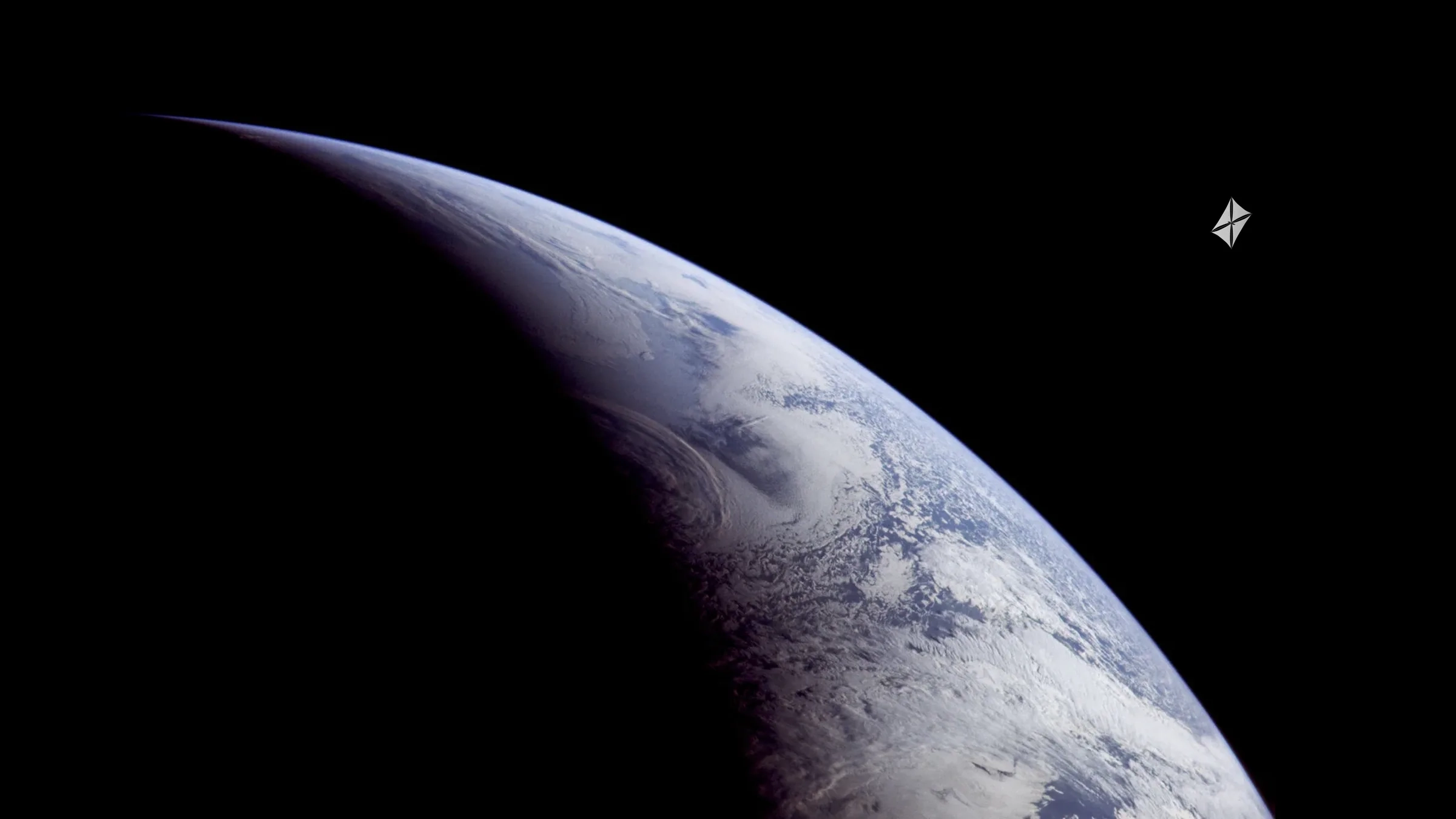
Retinal Exposure to Reflected Sunlight
- Author
- Eric Smith, Impact Scientist
- Review
- Outside coalition, pending
- Published
What a normal look at reflected sunlight does to the eye, and how we will measure it.”
Eye
With the naked eye, a normal look does essentially nothing. That's what our working model says.
Essentially isn't a number. So we're writing down what we'll measure, inviting outside scientists to break the model, and committing to change the service if they find a hazard.
- What we know
- A normal look sits far below safety limits.
- What we're testing
- Optics, long looks, unusual pupils.
- What we've committed to
- Outside review. Change if a hazard is real.
How Light Becomes a Hazard
Light harms the eye as a dose: brightness, image size on the retina, and time. Heat injures fast; blue light injures slowly. Both have published limits. 1. Sliney, D.H., for ICNIRP "Guidelines on limits of exposure to incoherent visible and infrared radiation" ICNIRP, Health Physics.
The eye defends itself: you blink, look away, your pupil narrows. Eclipse injuries come from staring past all of that. 2. Chen, J.C., Lee, L.R. "Solar retinopathy: clinical and imaging findings" A recognized pattern in eclipse-viewing injury literature.
The Edge Cases
Naked eye is the easy case. The work is in the cases nobody should try and someone will. The goal: a number of safe seconds we can stand behind.
- Optics
- An 8-inch telescope gathers about 800× the light of your pupil.
- Tracking
- Following it for 300 seconds.
- Pupils
- Dilated, medicated, or not responding.
- Night eyes
- Pilots and dark-adapted viewers.
Viewer
Pupil
Who Checks Our Work
Vision scientists at Stanford and UC Berkeley will review the model, and we've asked them to be critical. We'll name them when they agree.
Every endpoint was written down before results. Each step gets a post.
- Step 1. Working model
- Done
- Step 2. Reviewers named
- About a week
- Step 3. An answer
- About a month
| Endpoint | Written | Status |
|---|---|---|
| Heat dose, naked eye | Sep 2026 | Result in |
| Heat dose, with optics | Sep 2026 | In review |
| Blue light, 300 s tracked | Sep 2026 | In review |
| Unusual pupils | Oct 2026 | Written |
| Pilot glare | Oct 2026 | Written |
What Would Change the Service
[Draft] If a realistic case crosses the limit, we change the service before it ships.
Written before the results.